What Is the First Rule of Composting? Balance the Mix
What is the first rule of composting? Balance the mix before you chase heat. Start with carbon-rich browns, add nitrogen-rich greens, and keep the heap damp enough for microbes to work while leaving air gaps between the materials. The familiar 30:1 carbon-to-nitrogen figure is a useful description of the finished mixture, not a homework assignment for every carrot peel.
That distinction matters. A pile can contain the right broad ingredients and still fail because it is waterlogged, too dry, too small, or packed into a dense layer of grass. Treat balance as a working condition rather than a recipe, then let the pile’s smell, texture, and temperature tell you which adjustment is smallest and most useful.
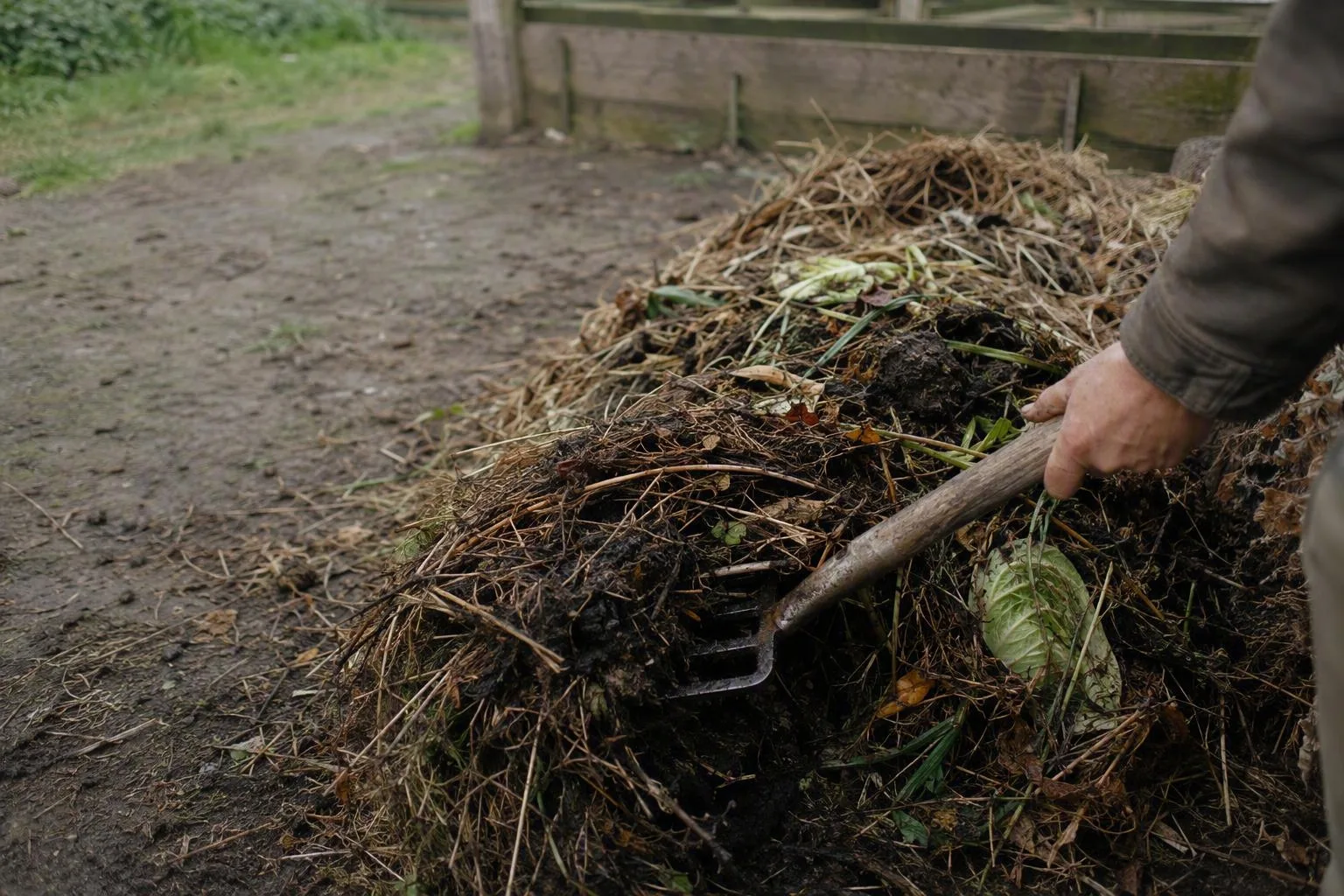
The first rule is balance—but not a perfect 30:1 recipe
Compost decomposers need a carbon supply for structure and energy, nitrogen for building proteins and new cells, water for their chemical work, and oxygen if the process is to remain predominantly aerobic. Browns usually supply more carbon and physical bulk. Greens usually supply more readily available nitrogen and moisture. Neither category is chemically pure, and neither label should be treated as a law.
The often-repeated target of roughly 25:1 to 30:1 carbon to nitrogen describes the overall material mix by weight. It does not mean you need to weigh a bucket of grass, calculate its nitrogen content, and compensate with a mathematically exact quantity of leaves. Household materials vary considerably: dry leaves are not all alike, cardboard may contain coatings or wet food residue, and fresh weeds change as they wilt.
A more useful home-garden rule is this: build with a varied carbon framework, add greens in manageable amounts, and correct the pile when its physical behaviour tells you to. If the heap smells sharp and ammonia-like, the readily available nitrogen is not being balanced or aerated well enough. If it stays dry and unchanged, more green material may not be the answer; water or a larger pile could matter more.
Think of the ratio as a map, not a destination. A mixed heap with shredded cardboard, damp leaves, vegetable scraps, chopped stems, and a little grass may decompose steadily even though no one has calculated its exact composition. A nominally balanced heap can stall if its particles are all the same size and press together.
My practical judgment is that physical balance deserves priority over numerical balance. A heap with air spaces and even moisture gives microbes access to both carbon and nitrogen. A chemically promising heap that has collapsed into a wet mat gives them neither in a useful way.
Build the pile from materials, not color labels
Sort materials by what they contribute, not simply by whether they look green or brown. Fresh grass is usually a nitrogen-rich, wet input. Fresh weeds may be nitrogen-bearing when young, but mature fibrous stems contribute more carbon and take longer to break down. Brown leaves are carbon-rich, yet their nutrient content and decomposition speed vary by species and condition.
| Material | Useful contribution | If it dominates | Small correction |
|---|---|---|---|
| Dry leaves | Carbon, fibre, and bulk | The heap may remain cool or dry if leaves are whole and packed loosely | Shred or mix with wetter greens |
| Shredded cardboard | Carbon and absorbent structure | A dry, papery pile can stall | Moisten it and combine with fresh material |
| Straw and chopped stems | Coarse carbon and air spaces | Large pieces decompose slowly | Cut them shorter or use them as a small structural fraction |
| Fresh grass clippings | Readily available nitrogen and moisture | Wet mats, sour smells, and oxygen loss | Add dry, coarse browns and loosen the mat |
| Kitchen scraps | Moisture and readily decomposable nitrogen-rich material | Local wet pockets or odour if buried in a dense layer | Cover each addition with browns and mix it through |
| Fresh weeds | Moist green material, especially before seed formation | Compaction or a quick nitrogen surge | Chop them and blend with dry material |
| Manure | Nitrogen, moisture, and microbial activity | A strong smell or a hot, wet centre if added heavily | Use a modest portion with plenty of carbon |
These are working categories, not fixed identities. A sack of dry leaves stored through a wet winter may carry more moisture than freshly shredded cardboard, even though both are normally treated as browns. In my read, aged manure tends to run less reactive than fresh manure, though storage conditions vary; a covered, damp material and a dry, weathered one should not be expected to behave alike.
There is a useful visual test here. A pile made mostly from leaves should look springy and fibrous, with pockets of empty space. A pile made mostly from chopped grass should look compressed and slick. The correction is not “add more greens” or “add more browns” by reflex. It is to restore the missing physical function: dry absorbency, coarse structure, or moisture.
One material deserves extra caution: manure from unknown sources can contain contaminants or persistent herbicide residues. For food-growing beds, use manure only when you know its source and follow local guidance on safe handling and harvest intervals. Do not add pet waste to a pile intended for edible crops.
For a closer comparison of slow and hot systems, see Leaf mould versus hot compost: which method suits your garden. Leaf mould is not a failed hot pile; it is a different decomposition route built around damp, carbon-heavy leaves and patience.
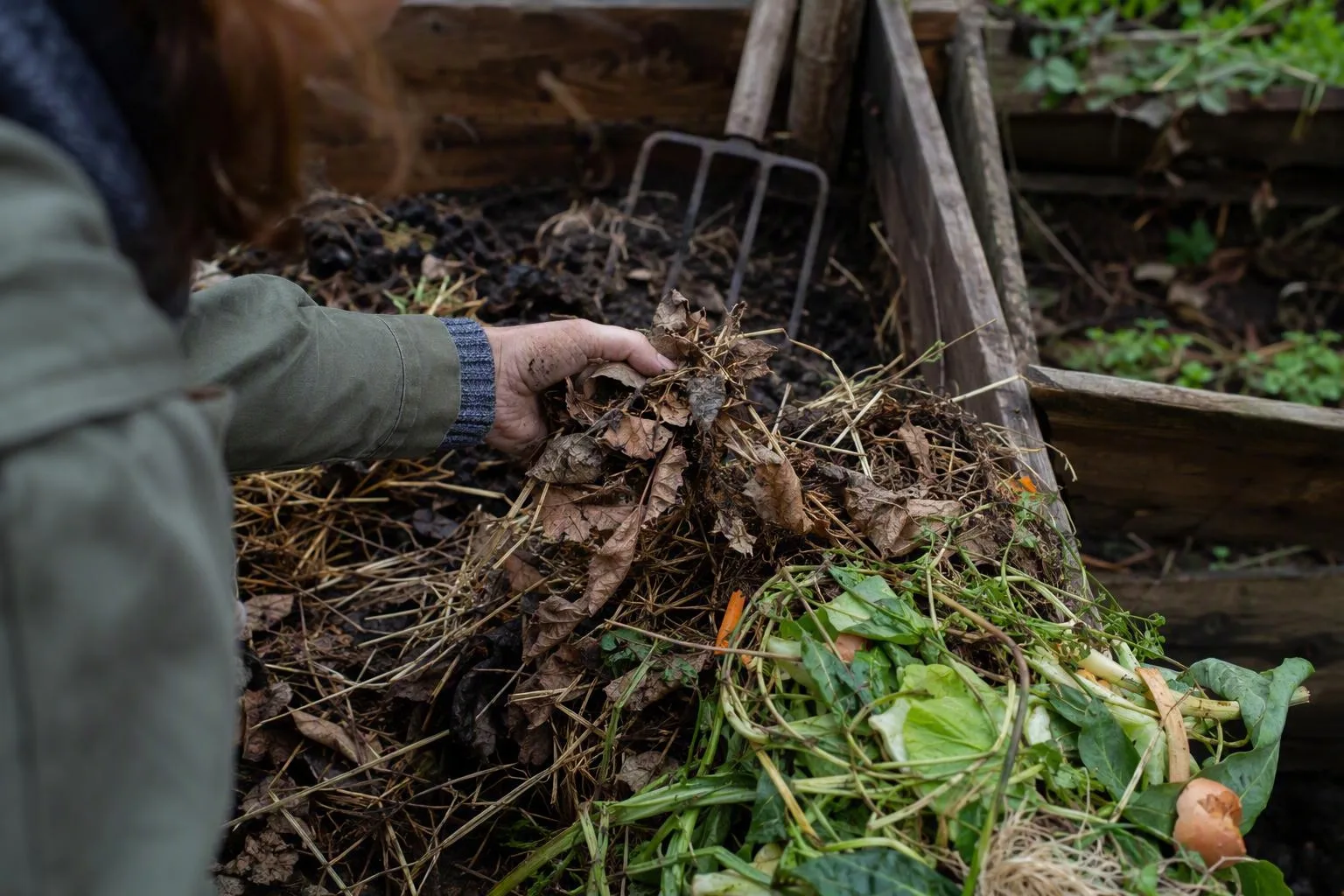
Read the pile’s symptoms before you add anything else
A compost pile usually gives you enough information to make the next decision. Use the symptoms in order: smell, squeeze, texture, temperature, then size. This prevents the common mistake of adding another bucket of “greens” to a pile that is actually too wet or too small to heat.
If it smells of ammonia
A sharp ammonia smell points me first toward excess readily available nitrogen, excess moisture, or poor air exchange. A thick layer of fresh grass or a large pocket of food scraps can create all three conditions at once: the material is nitrogen-rich, it releases water as it breaks down, and it collapses against itself.
Pull apart the smelly section. If it is slick and clumped, mix in dry leaves, torn uncoated cardboard, or chopped straw. Turn only enough to break the compacted pocket and distribute the dry material. Adding another wet green input is the wrong direction.
If it smells sour or rotten
A sour or rotten-egg odour suggests that oxygen is not reaching part of the pile. Look for a wet mat, a sealed base, or a heavy layer of fine material. Coarse browns can reopen air channels, but simply piling more dry leaves on top may leave the anaerobic pocket untouched. Fork through the affected layer, separate clumps, and rebuild it with rougher material.
If it is cold
Cold does not automatically mean failure. A pile can be cold because it is too small to retain heat, too dry for microbes to remain active, or dominated by woody, slow-to-decompose material. Leaf mould may stay cool for a long period and still be progressing normally.
Squeeze a handful from the centre. If it will not hold together at all and feels dusty, add water as you mix. If it forms a shiny lump or releases water, add dry structure and open it up. If the handful feels moderately damp but the pile is small, combine more material rather than forcing in extra nitrogen. Heat depends on a sustained active volume, not just on the presence of kitchen scraps.
If it heats briefly, then stalls
A short burst of heat followed by a stall usually means the easiest food has been consumed or the pile has lost a working condition. Check whether the centre has dried, collapsed, or become dominated by coarse stems. A pile that contains plenty of browns but very little accessible moisture can look full while behaving like a bundle of dry twigs.
Moisten dry material as you turn it. If the interior is damp but stringy and woody, add a moderate amount of chopped greens and mix them through rather than making a green core. If the pile is compacted, restore coarse air spaces first.
Here is the repair path worth saving:
- Smell the centre, not the outer shell.
- Squeeze a representative handful and check whether it is dusty, damp, or dripping.
- Pull apart a compacted layer and inspect for slick mats.
- Check the centre temperature with a compost thermometer or by touch, understanding that touch is only a rough comparison.
- Make one small correction: dry carbon for a wet or sharp-smelling pile, water for a dry pile, coarse material for a compacted pile, or more total volume for a small cool pile.
- Wait long enough to observe that correction before adding several new ingredients.
That last step is where many repairs go wrong. If you add leaves, grass, water, manure, and food scraps together, you may improve the heap but lose the ability to tell which condition was limiting it.
For a deeper restart sequence, use the decision points in Why a compost pile stops heating and how to restart it. The useful distinction is between a carbon-heavy heap and a simply inactive one: the former often has plenty of dry fibrous matter and little moisture, while the latter may be small, cold, or poorly aerated despite containing several ingredient types.
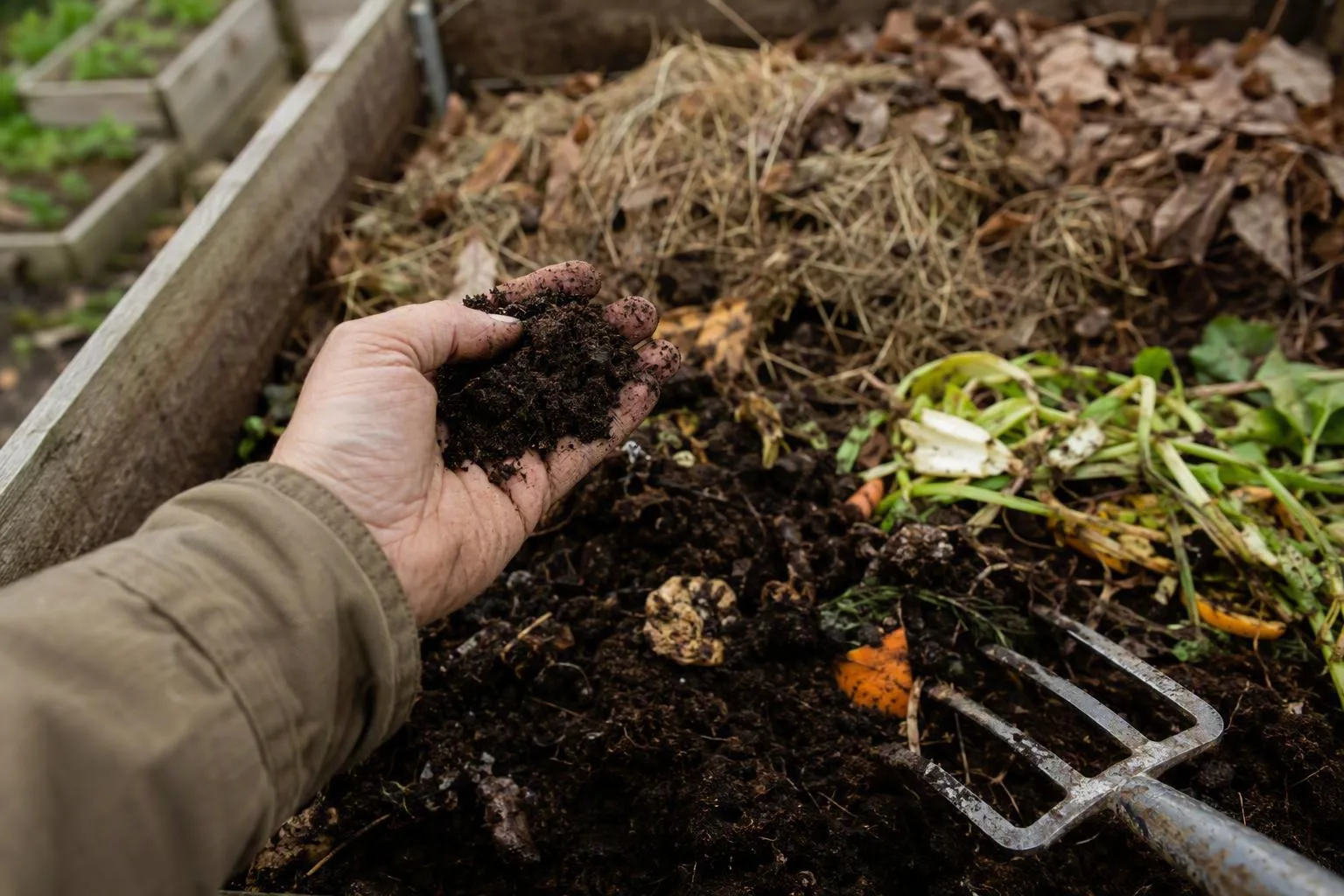
A repeatable first batch: layer, moisten, mix, and wait
For a first batch, start with a coarse base: small twigs, chopped stems, or rough straw. The aim is not to create a perfect bottom layer. It is to prevent the wettest material from sealing against the ground or bin floor.
Add a mixed layer of browns and greens rather than building a tall sandwich of one material at a time. A practical sequence is:
- Place coarse browns at the base.
- Add chopped greens, kitchen scraps, or a thin manure layer.
- Cover the fresh material with leaves, shredded cardboard, or another dry carbon source.
- Moisten dry inputs as you build, stopping when the material feels like a wrung-out sponge rather than dripping.
- Repeat until the heap is large enough to retain some warmth, then leave it undisturbed for several days unless it smells or collapses.
Chopping speeds the process because it gives decomposers more surface area, but it also removes air space. Fine material needs coarse companions. This is why a pile made entirely from shredded leaves or grass can fail even when its chemical ingredients seem reasonable.
Turn when the centre compacts, develops an odour, or becomes much wetter than the outside. Turning on a calendar can be useful for a deliberately managed hot pile, but it is not a moral duty. Excessive turning can dry a small heap and interrupt the warm, stable interior that decomposers have established.
An active pile may begin heating within several days when it has enough moist, mixed material and sufficient volume. A cool, leaf-mould-style heap can take much longer and may never become hot. Hot composting trades labour, closer moisture control, and repeated mixing for faster breakdown. Low-turn composting trades speed for convenience. Sheet-style decomposition trades a tidy finished product for direct feeding of soil organisms at the surface.
Choose the system that fits the material you actually produce. If autumn gives you bags of leaves but little fresh nitrogen, leaf mould is the sensible route. If a household produces regular food scraps and grass clippings, a mixed bin can work, provided dry material is kept beside it for immediate correction.
Once the compost is finished, the next question is how to use it without creating a nutrient or seedling problem. Read How to use finished compost without tying up nitrogen before mixing a large amount into a bed. And if your aim is soil improvement rather than making compost for its own sake, How much compost to add to raised beds each season gives you the planning question that follows the pile.
Questions gardeners ask at the first failed batch
Can you compost without measuring the exact carbon-to-nitrogen ratio?
Yes. Use a varied mix, keep dry browns available, and judge moisture, texture, smell, and activity instead of calculating every ingredient. Exact analysis can be useful in commercial systems, but most household piles are better managed by correcting visible conditions.
Why does my compost pile smell like ammonia?
Check for a concentrated nitrogen-rich input, excess moisture, and compaction. Mix in dry, coarse carbon materials such as leaves, shredded cardboard, or chopped straw, then loosen the affected section.
Can a compost pile be too dry even if it contains green materials?
Yes. Green material does not guarantee that the whole pile is damp, especially in a small heap or during dry weather. Test the centre rather than judging from the colour of the ingredients.
The first rule is balance, but balance is not a colour-coded shopping list. It is the point at which carbon, nitrogen, water, and air are available together. Start your next batch with a coarse brown framework, keep a dry correction material within reach, and make the first repair based on what the pile is doing rather than what you intended to add.
Frequently Asked Questions
Can you compost without measuring the exact carbon-to-nitrogen ratio?
Yes. Use a varied mix, add several handfuls or a layer of browns whenever the pile is wet or smelly, and judge moisture, texture, odor, and heat rather than trying to calculate every ingredient.
Why does my compost pile smell like ammonia?
The pile probably contains too much readily available nitrogen, is too wet, or lacks air. Mix in dry, coarse carbon materials such as shredded cardboard, dry leaves, or chopped straw, then loosen compacted sections.
Can a compost pile be too dry even if it contains green materials?
Yes. Fresh greens do not guarantee adequate moisture, especially in a small pile or during dry weather. The material should feel like a wrung-out sponge rather than drip when squeezed.