Raised Bed Soil Mix: The 3-Part Recipe That Holds Water
A raised bed soil mix made from equal parts mineral soil, finished compost, and coarse aeration material gives roots three things at once: support, moisture storage, and air. For a 4-by-8-foot bed filled to 12 inches, that ratio works out to about 32 cubic feet of finished mix before settling, or roughly 10.7 cubic feet of each ingredient. The point isn’t to make the bed uniformly wet; it’s to give water somewhere to stay without displacing all the air roots need.
That three-part recipe is a starting structure, not a sacred formula. A wet garden with clay beneath it needs a different adjustment from a dry raised bed over free-draining gravel. Begin with the mineral fraction, use genuinely mature compost, and choose the third ingredient according to how quickly your bed loses water.
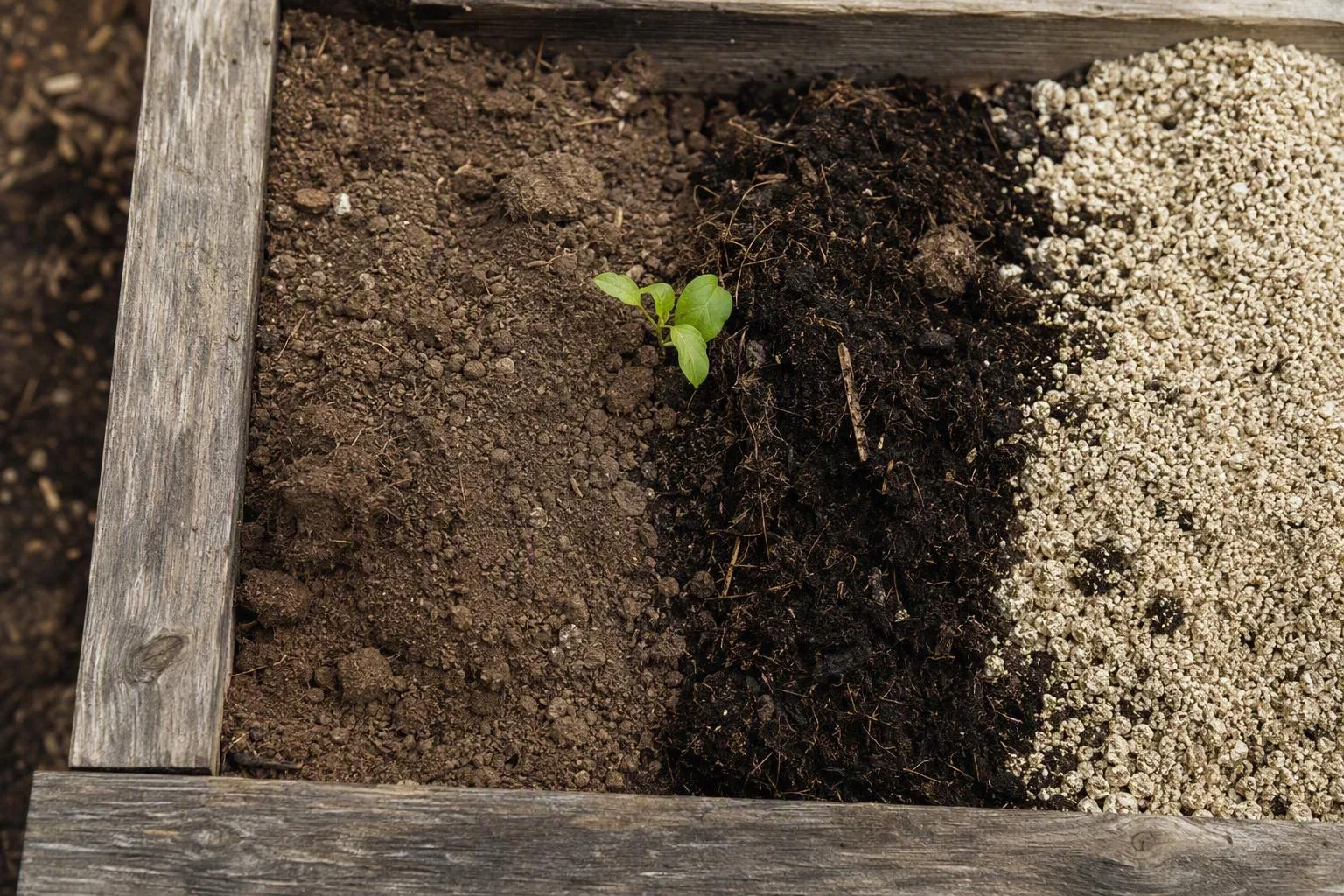
Start with the three parts: mineral soil, mature compost, and coarse aeration material
The practical recipe is simple: combine roughly one-third screened topsoil or loam, one-third finished compost, and one-third coarse material such as fine pine bark or a good-quality coir product. Mix by volume, not by weight. A bucket, trug, or builder’s bag gives you a repeatable measure; a shovel-full of wet compost and a shovel-full of dry bark don’t weigh or behave alike.
Use the ratio as a base and then make a controlled adjustment. If the bed is over heavy clay and stays wet below, increase the mineral fraction and use a modest amount of coarse bark rather than adding still more compost. If it sits on a roof, paving, or very sandy ground and dries rapidly, retain the equal-part framework but add surface mulch and irrigation before making the mix substantially finer.
The best soil mix for raised beds is not the one that holds the most water in a bucket. It is the one that holds enough water between irrigations while leaving connected air spaces around the roots.
The recipe works because each ingredient occupies a different job
Mineral soil supplies the dense fraction. Sand, silt, clay, and the stable mineral surfaces in loam give the bed weight and provide places where nutrients can be retained. Without some mineral body, a bed filled with light organic materials can settle, shift, or dry in uneven layers.
Finished compost contributes decomposed organic matter and a population of organisms that continue processing residues. It also helps mineral particles aggregate into crumbs. Those crumbs are more useful than a uniformly fine powder because they create a mixture of small water-holding spaces and larger air passages.
The third ingredient is structural insurance. Fine pine bark, coarse coir, leaf mold, or another stable fibrous material interrupts dense packing. Water-holding pores retain a film or reservoir of moisture; larger drainage pores let excess water move away and allow oxygen back into the root zone. Adding more compost may increase the amount of organic matter, but it doesn’t automatically create the larger pores that prevent a saturated bed.
Think of the mix as a building with rooms and corridors. Small pores are rooms where water remains after drainage. Large pores are corridors for air and moving water. A mix with rooms but no corridors becomes muddy; a mix with corridors but very few rooms demands frequent irrigation.
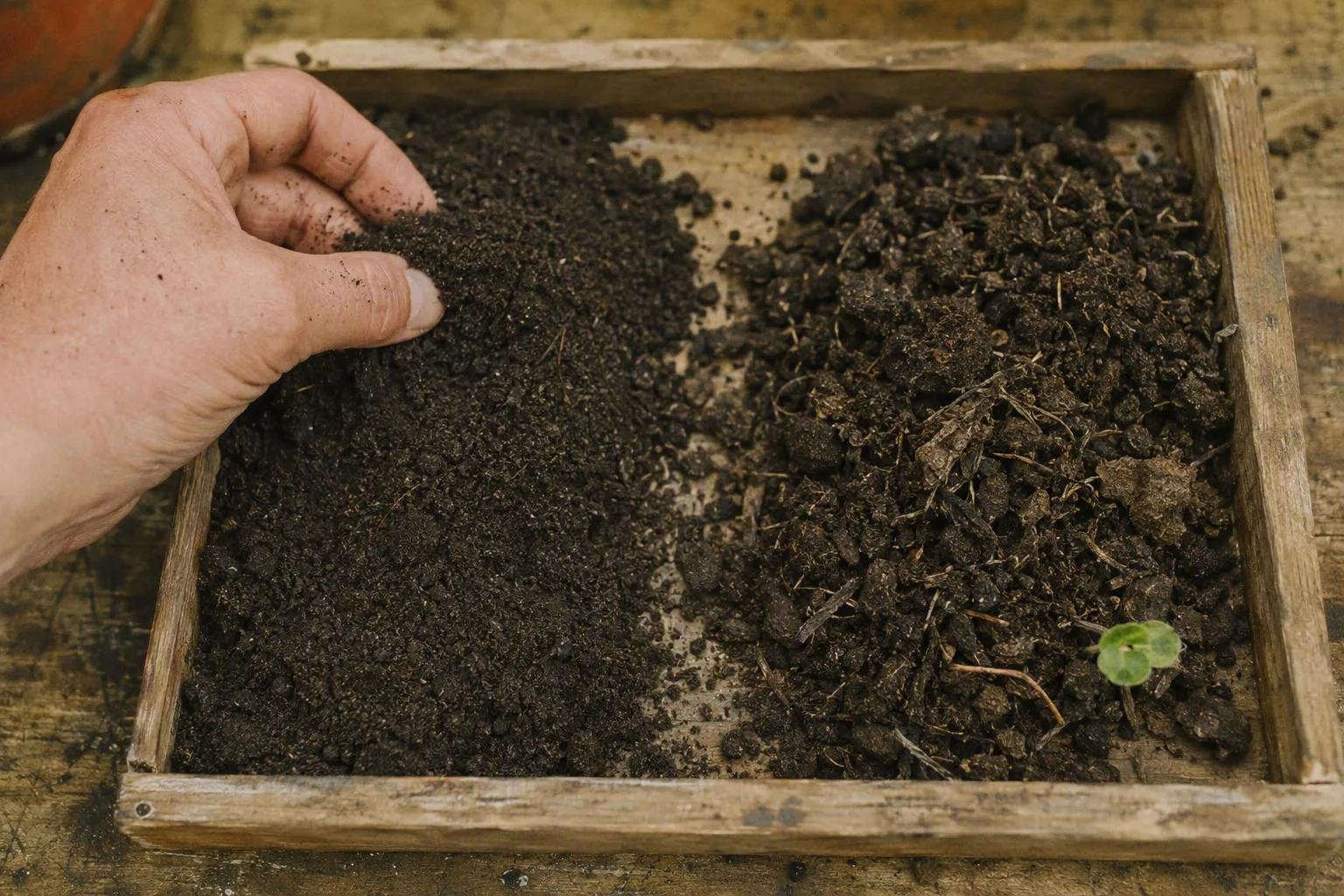
Choose the third ingredient for your climate, not by habit
Fine pine bark is a strong choice for many raised beds because its irregular particles create structure while the organic fraction slowly changes. It suits beds that need more air space, particularly where compost-heavy mixes tend to slump. Bark quality varies: very fresh, chunky bark can tie up some available nitrogen at the surface as microbes decompose it, while dusty bark fines can pack more tightly than expected.
Coconut coir is useful where consistent moisture buffering matters. It is light, fibrous, and can re-wet after drying more readily than some peat-based materials, but compressed coir must be fully hydrated and mixed evenly. Poor-quality or insufficiently rinsed coir may carry soluble salts, so the product’s processing information matters for edible beds. A detailed comparison of Pine bark fines vs coconut coir for garden soil structure is worthwhile when those are the two materials available locally.
Leaf mold can be an excellent moisture-buffering component if it is fully decomposed and free of persistent weed roots. Its texture depends heavily on the leaves and how long they have broken down. Peat moss holds water and is widely used in growing media, but it is acidic and can become difficult to re-wet after severe drying; it also brings an environmental trade-off that makes it a poor automatic choice for every bed.
Perlite creates large, lightweight air spaces but contributes little nutrient-holding capacity and can rise or migrate in a heavily watered bed. Vermiculite holds more water than perlite and is more useful for seed-starting textures than for the bulk of a deep vegetable bed. In a humid climate or a bed over poorly draining ground, favor coarse structure. In a hot, dry position, pair a moderate moisture-buffering material with mulch and timed irrigation instead of relying on fine particles alone.
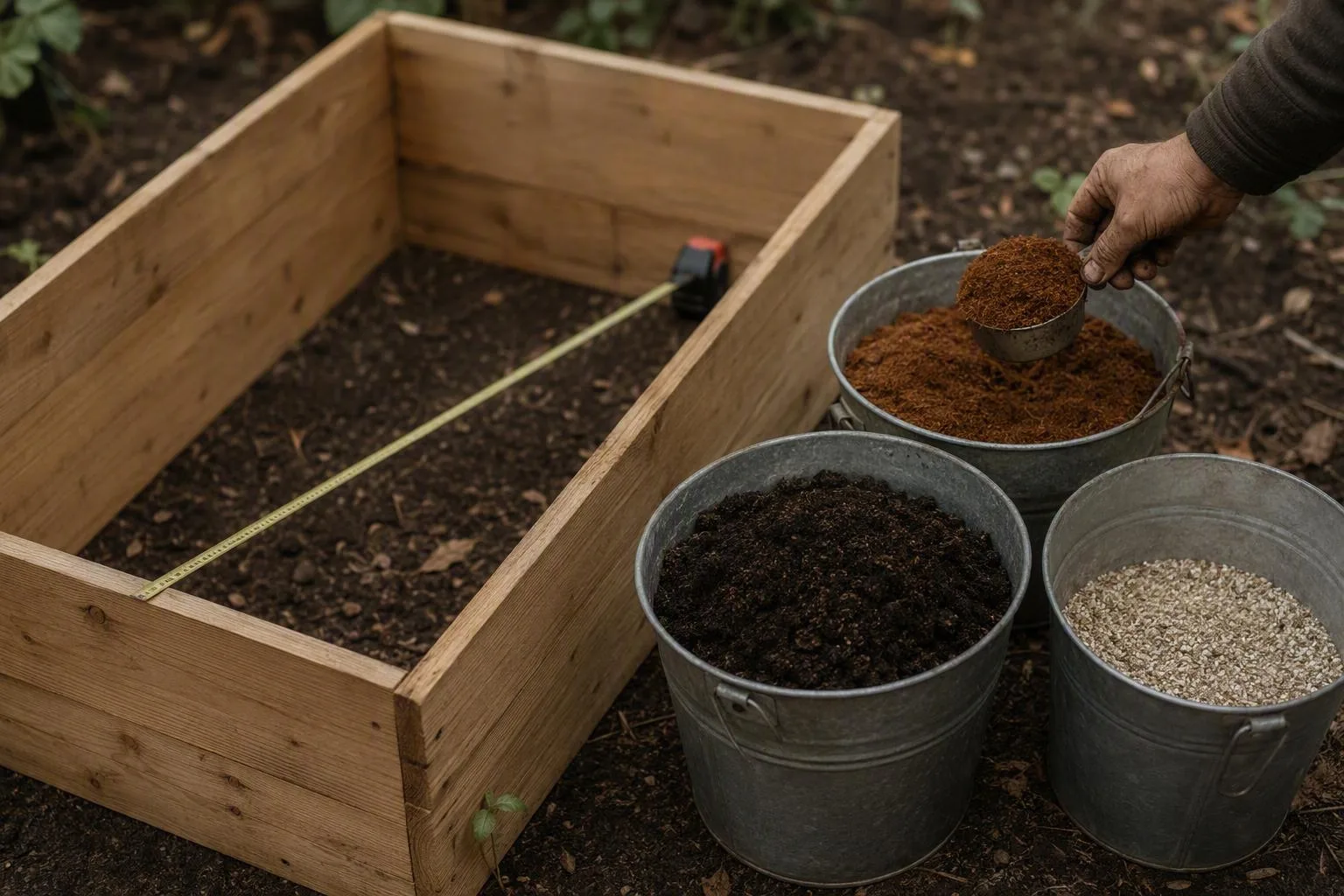
A simple batch calculation for a 4-by-8-foot bed
Calculate the internal volume before ordering anything:
- Multiply length by width by fill depth, using the same unit for all three.
- For a 4-by-8-foot bed filled to 1 foot, calculate 4 × 8 × 1 = 32 cubic feet.
- Divide the total by three: about 10.7 cubic feet of mineral soil, 10.7 cubic feet of compost, and 10.7 cubic feet of coarse material.
That is the volume placed into the bed, not a promise that the finished surface will remain at exactly 12 inches. Wetting, settling, the roughness of the underlying ground, and the shape of the materials all alter the final level. If the bed is only 8 inches deep, use 4 × 8 × 0.67, which gives about 21.4 cubic feet before settling. For any shape, use length × width × average depth, then convert the result into the unit used by the supplier.
Buying by cubic volume is more reliable than counting bags because bag sizes differ and some products are sold loose while others are compressed. Leave a small allowance for topping up, but don’t fill high above the frame unless you have a clear plan for retaining the material during rain.
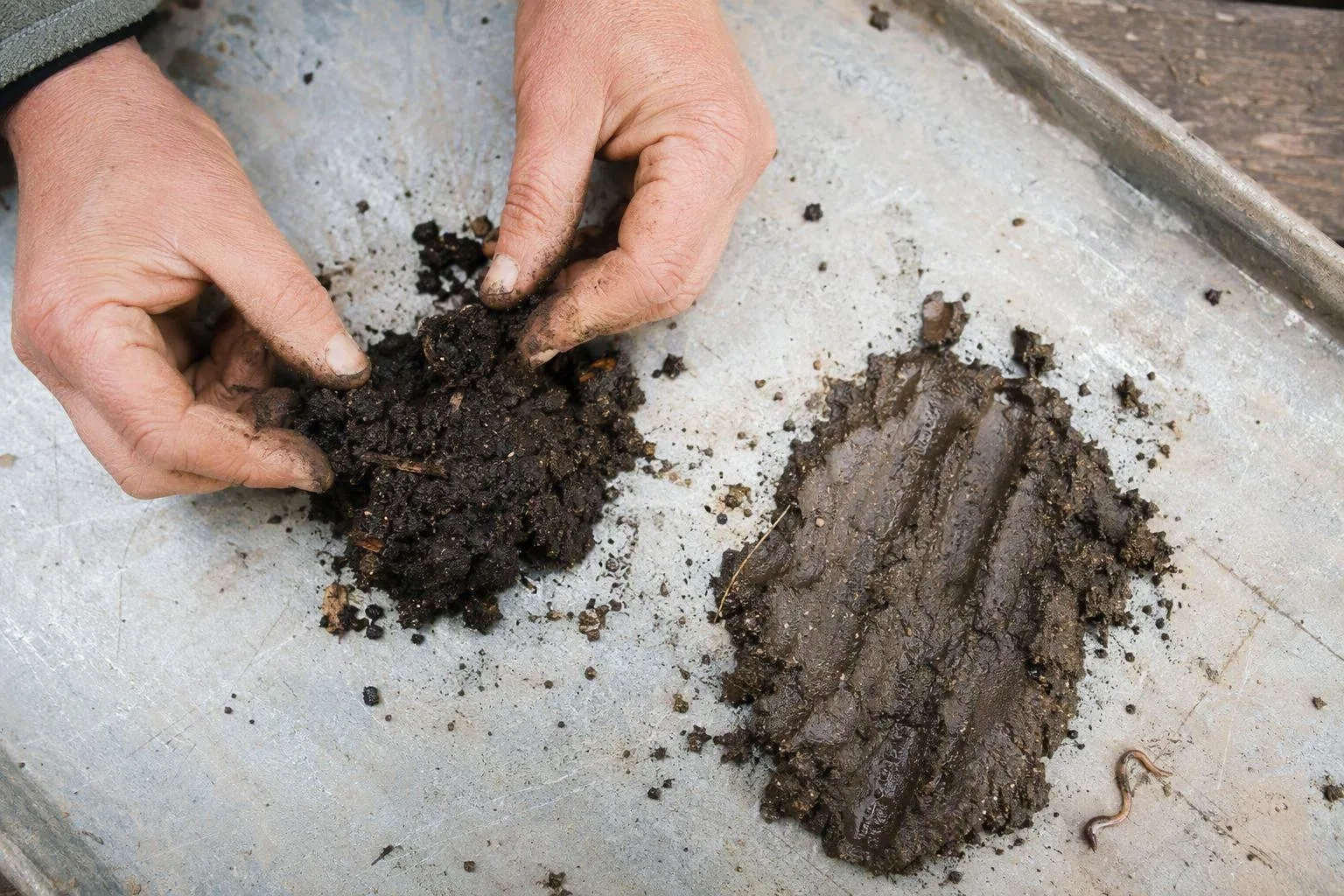
Test the mix before planting: the squeeze, infiltration, and settling checks
Don’t diagnose a full bed by looking at its colour. Take a bucket of the blended material and wet it gradually until it feels like damp soil rather than mud. Squeeze a handful. It should form a loose ball, then break apart when lightly pressed. If it smears between your fingers or remains a glossy lump, the mix has too much fine, wet material or too little structural fraction.
Next, fill a container with drainage holes and pour water slowly over the surface. Water should enter rather than sit as a shiny puddle. If the surface repels water, dry coir or very dry peat may need thorough pre-wetting and mixing; a crust of fine compost may also be sealing the top. If water disappears immediately and the sample cannot hold a shape when damp, it may contain too much coarse bark, perlite, or dry fibrous material.
Wet the sample fully, let it drain, and check it again after it dries partway. A mix that collapses into a dense layer after one wetting is likely to settle substantially in the bed. That doesn’t mean every visible drop is a failure: organic-rich mixes change volume as particles rearrange and decomposable material shrinks. The warning sign is a distinct loss of pore structure, not simply a lower surface.
Floating bark indicates particles that are too light, too dry, or insufficiently integrated. Mix them through the mineral fraction rather than leaving a thick bark layer at the surface. A muddy ball calls for more coarse structure and less wet compost in the batch. Rapid drainage with no moisture retention calls for finer organic matter or better mulch, not automatically another load of compost.
When garden soil belongs in the bed—and when it quietly ruins the blend
Clean garden soil can be useful in a raised bed, particularly when it is crumbly, free of persistent perennial weeds, and not compacted into hard clods. It adds mineral weight and makes the mix less dependent on imported organic materials. Screen out roots and large stones, but don’t reduce healthy soil to dust; some variation in particle size helps preserve pore space.
Heavy clay needs a more careful decision. Incorporating a moderate amount of clay soil into a genuinely mixed blend can add water-holding and nutrient-retaining surfaces. Hiding a thick layer of imported material over the clay does not solve drainage, because water can perch at the boundary between layers. Mix across the transition or improve the bed’s overall drainage route.
Avoid soil from places where contamination is plausible, such as beside heavily trafficked roads, painted or chemically treated structures, or areas with an unknown history of industrial use. For edible crops, use compost and soil amendments from reliable sources and follow the label directions for any treated product. If contamination is a concern, local soil testing is a better basis for action than guessing from plant performance.
Bagged raised-bed products can be convenient when clean mineral soil is unavailable, but they vary in texture and may contain a high proportion of compost or wood fibre. Potting soil is designed for containers and often prioritizes low weight and drainage; it is not automatically the best entire fill for a large bed.
The compost limit: why more than one-third can backfire
Keeping compost near one-third of the initial blend is a useful practical ceiling for a general vegetable bed. That is a judgment about stability, not a universal chemical law. The more compost you add, the more important its maturity, salt level, texture, and feedstock become.
Immature compost can still contain recognizable straw, wood, or food scraps. It may warm after incorporation, smell sour or ammoniacal, or continue shrinking as microbes consume readily decomposable material. That activity can compete with seedlings for available nitrogen, especially where fresh carbon-rich material is mixed through the root zone.
Finished compost usually has a soil-like smell, is near ambient temperature, contains few recognizable original ingredients, and has a crumbly texture. Dark colour alone proves little. A black, wet product can still be immature or salty. If a batch is suspect, use it as a thin surface layer away from germinating seeds while you assess how plants respond, rather than filling a whole bed with it.
Excess compost can also create a loose bed that anchors tall crops poorly, settles unevenly, and behaves unpredictably between wet and dry conditions. For a deeper explanation of selection criteria, see How to choose finished compost for vegetable beds.
Build it once, then manage the surface instead of remaking the bed
After filling, water the bed thoroughly in stages. The aim is to settle air pockets without washing fine material into one corner. Check the level after the first heavy rain or irrigation cycle, then top up low spots with the same general blend rather than a cap of pure compost.
Keep the surface covered. A layer of leaf mulch, clean straw, or another suitable organic mulch reduces evaporation, moderates temperature, and protects the surface aggregates from repeated impact by irrigation and rain. Leave a small gap around stems so wet mulch does not sit against soft plant tissue.
At the end of a crop, remove diseased plant material according to local guidance and cut healthy residues at the surface when practical. Avoid routine deep digging. Turning a settled bed repeatedly breaks fungal connections, disrupts aggregate continuity, and brings buried weed seeds closer to light. Fork lightly only where compaction or a specific crop requires it.
Organic matter changes over one to three seasons. Some of it is converted into carbon dioxide, some becomes more stable, and some is physically rearranged by wetting, roots, and organisms. A lower surface does not automatically mean the bed has failed. Add a modest top-dressing of finished compost when the level drops or crop performance and soil testing indicate a need. For a crop-by-crop recovery plan, use How to refresh raised bed soil after a season of heavy feeding rather than rebuilding the entire profile every spring.
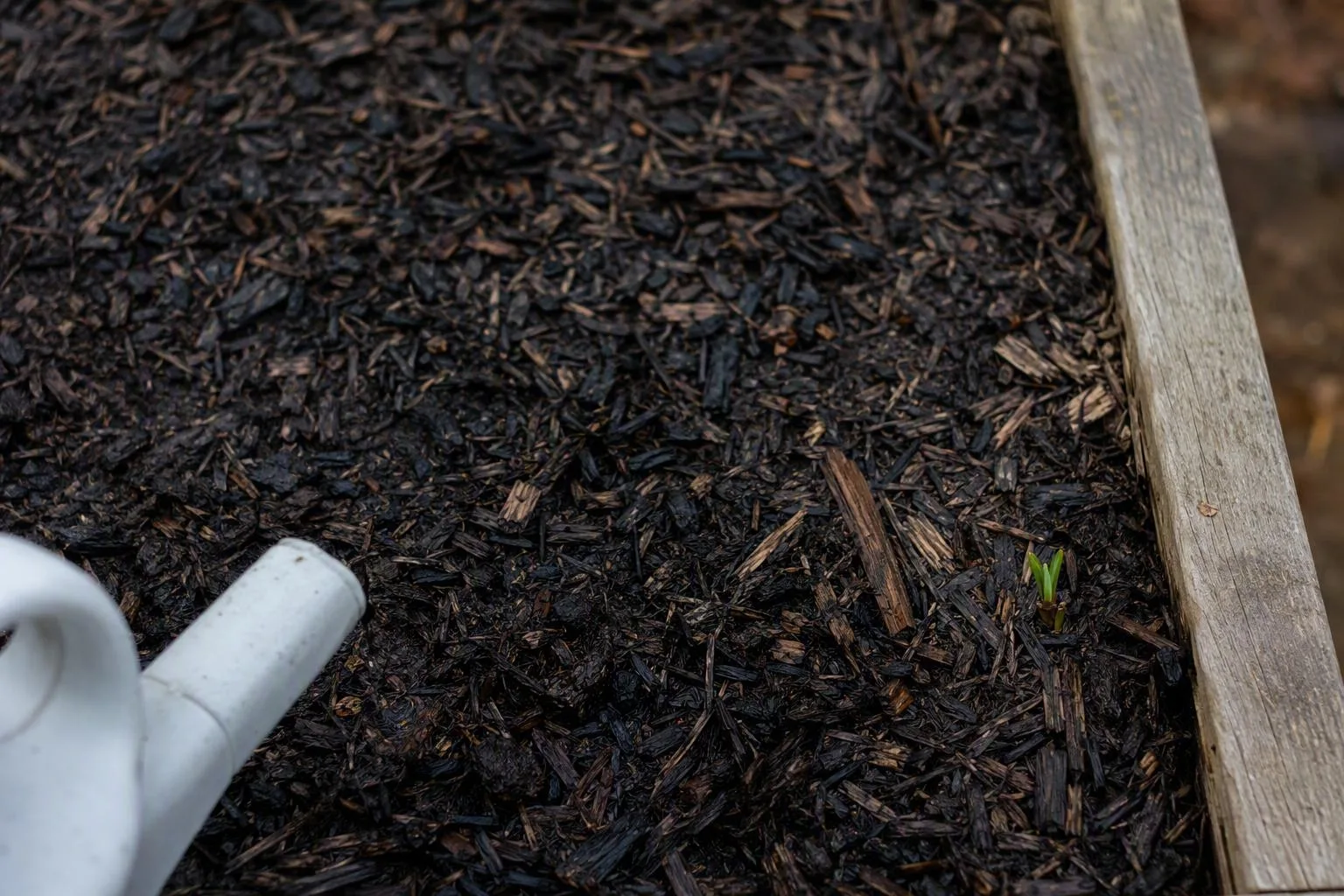
Match the mix to roots, rainfall, and crop demand
Carrots, parsnips, and other root crops need a stone-free, evenly textured zone. Large bark pieces or uncomposted wood can fork roots and create abrupt changes in resistance. For these crops, screen the upper growing layer and use a well-blended mineral fraction, but don’t turn the whole bed into fine dust.
Leafy vegetables need steady moisture and frequent nutrient access. They benefit from compost and mulch, but a finer mix alone is not a substitute for consistent watering. Tomatoes and peppers need anchorage and an aerated root zone as well as moisture. A bed that stays saturated after irrigation can produce lush-looking foliage while slowing root function.
Drought-tolerant herbs such as thyme, rosemary, and oregano are a poor reason to make an entire vegetable bed excessively gritty. Give them a separate, sharply drained position if possible. Raised beds already tend to warm and drain differently from ground soil because their sides expose more soil surface and their fill may sit above surrounding water pathways. The sensible response is to pair a structurally open mix with mulch and irrigation timing. Advice on Raised bed irrigation: how often to water in hot weather helps complete that system.
Troubleshoot the season you actually have
| What you see | Check first | Least disruptive correction |
|---|---|---|
| Surface dries within hours | Exposed soil, shallow watering, coarse or hydrophobic material | Pre-wet dry coir or peat, apply mulch, and improve irrigation coverage before adding more compost. |
| Center stays wet | Fine compost-heavy mix, compacted base, or a boundary over heavy clay | Stop frequent shallow watering; open only the affected area and blend in coarse structure if the problem is within the fill. |
| Plants yellow despite dark soil | Waterlogged roots, immature compost, nutrient imbalance, or unsuitable pH | Check moisture below the surface and use a soil test before adding fertilizer. |
| Bed sinks dramatically after rain | High proportion of decomposable organic material or poorly integrated bark | Top up gradually with mineral soil and mature compost rather than replacing the whole bed. |
For the first symptom, dig below the dry crust before deciding the bed needs more water. For the second, don’t solve a drainage problem by adding a finer water-holding ingredient. For yellow leaves, dark colour is not a nutrient test. For dramatic settling, inspect what remains: a fibrous, recognizable layer points toward immature or unstable organic material, while a firm mineral surface suggests the bed has simply compacted.
The wider principle is worth saving: water retention is a pore-space problem before it is a watering problem. The three-part raised bed soil mix works because mineral particles, mature organic matter, and coarse structure divide that work. Once the bed is built, adjust the surface and the irrigation pattern before reaching for another bulk ingredient.
Can I fill a raised bed with compost instead of using a three-part soil mix?
Compost is better treated as an organic matter and nutrient source than as the entire permanent growing medium. A compost-only bed can settle as decomposable material disappears, anchor tall plants poorly, and shift between wet and dry conditions. It may also contain more soluble nutrients or salts than seedlings tolerate. Use finished compost as one part of a structurally mixed profile, then top-dress modestly as the bed changes.
Should I use potting soil or raised-bed soil in a vegetable bed?
Usually, neither needs to make up the entire fill. Potting soil is formulated for containers where low weight and predictable drainage matter; a raised bed benefits from more mineral body and long-term weight. A purchased raised-bed blend can be useful when clean topsoil is unavailable, but inspect the label and feel the product. If it is mostly fine compost or very light fibre, blend it with a stable mineral component before filling deeply.
How often should I add compost to a raised bed?
Judge the need from the surface level, soil texture, crop performance, and a soil test rather than applying a large fixed volume every year. A shallow top-dressing before planting or after harvest is less disruptive than digging a thick layer through the bed. If the bed is sinking rapidly, diagnose the original material first; repeated compost additions can hide the cause while making the structure less stable.
Frequently Asked Questions
Can I fill a raised bed with compost instead of using a three-part soil mix?
No. Compost is an amendment and nutrient source, not a stable sole growing medium; explain the risks of settling, excess soluble nutrients, poor anchorage, and inconsistent water behavior.
Should I use potting soil or raised-bed soil in a vegetable bed?
Usually neither as the entire fill. Compare their intended container properties with the weight, mineral fraction, and long-term structure needed in a raised bed, while noting that a purchased raised-bed blend may be useful when clean topsoil is unavailable.
How often should I add compost to a raised bed?
Recommend judging by plant performance, settling, and soil tests rather than adding a fixed large volume every year; a shallow top-dressing after harvest or before planting is safer than repeatedly rebuilding the bed.